TBS Home2026-01-28T15:11:29+00:00

Tampa Bay Surveillance Project

Investigating contaminants for human and environmental health.

TBS Objectives

  • 1 – Sample sediments, oysters, barnacles, fish, and fishers of Tampa Bay to assess concentrations and seasonal patterns of contaminants of emerging concern (CECs) and legacy pollutants.

  • 2 Determine relationships between contaminant body burdens and a range of health-related effects.

  • 3 – Characterize associations between chemical contaminants.

  • 4 – Survey human consumption patterns focusing on subsistence-level fishers.

  • 5 – Develop quantitative risk assessments for seafood consumption.

  • 6 – Test prototype remediation methodologies.

  • 7 – Inform various City, County, State and Federal agencies.
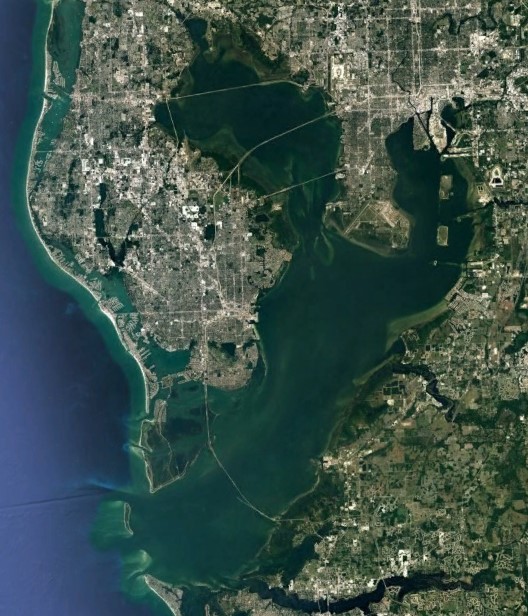
Satellite map of Tampa Bay

Satellite Image of Tampa Bay, Florida

“The Tampa Bay Surveillance Project combines the skills and knowledge of the region’s foremost recreational fishing captains and world class scientists from USF’s College of Marine Science and Eckerd College to evaluate pollution from a wide range of industrial, agricultural and personal care products.”

Steven Murawski, Principal Investigator

Trusted Collaborators

Our Management Technical Advisory Group (MTAG) is comprised of experts in water, environmental, wildlife and human health. The knowledge and perspectives from their respective disciplines and organizations will help guide our research to have the biggest impact on our local communities.

TBS News

Stay current with our latest updates and announcements.
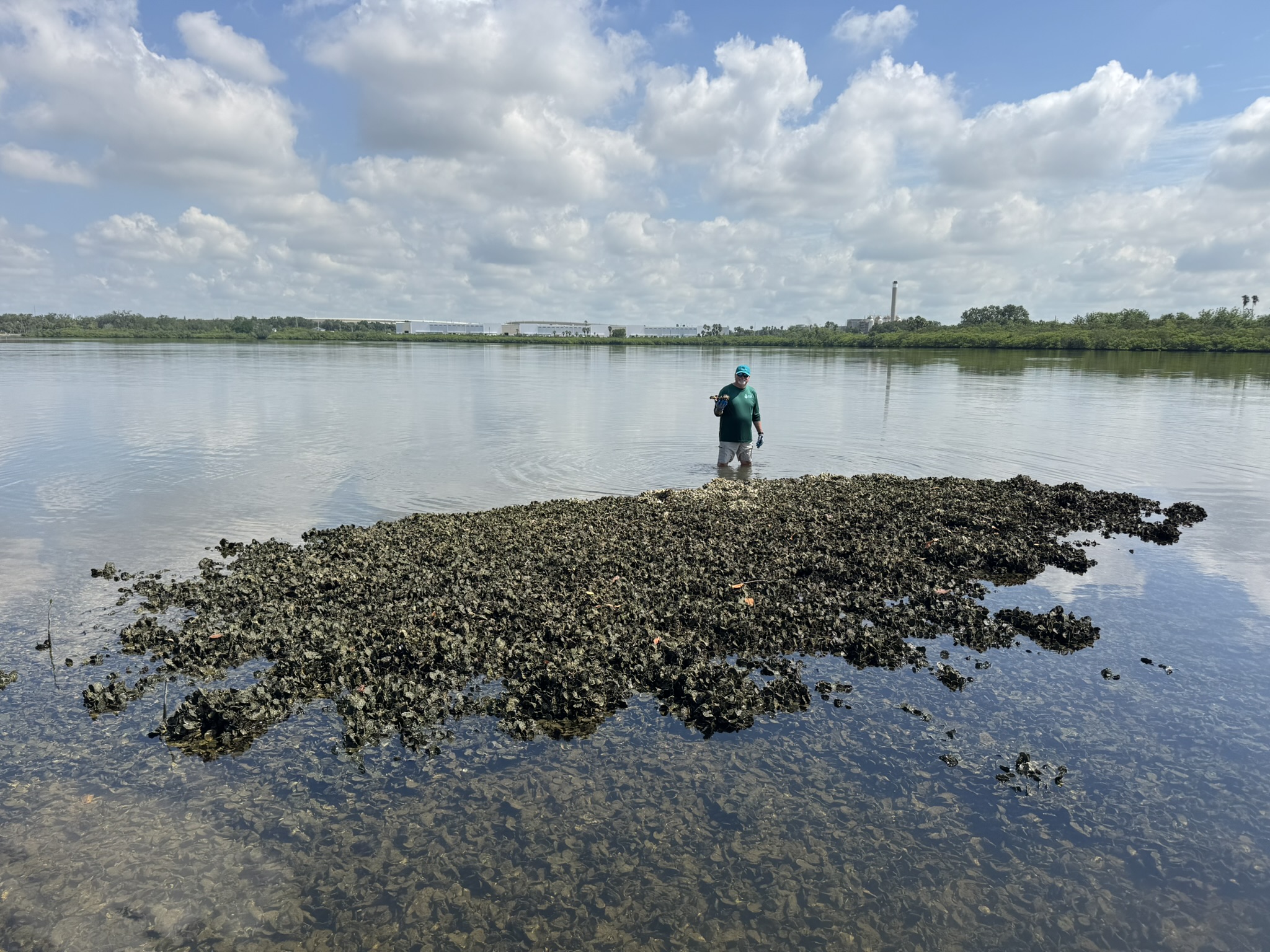
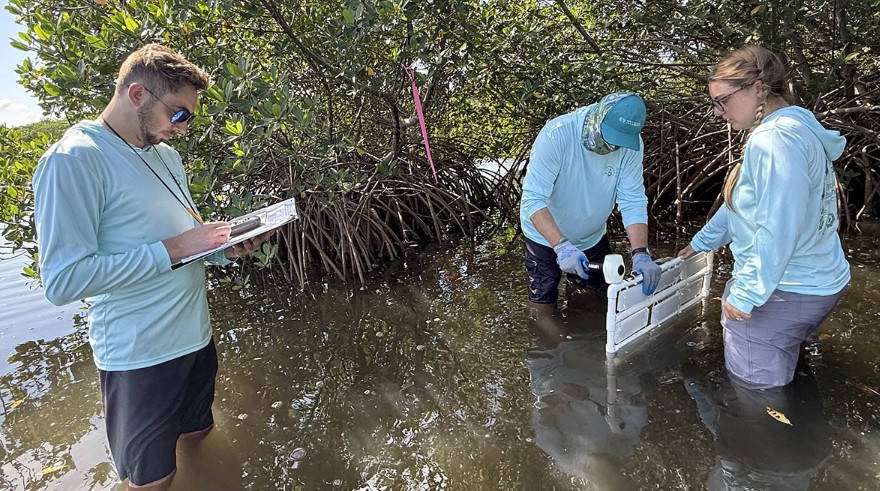
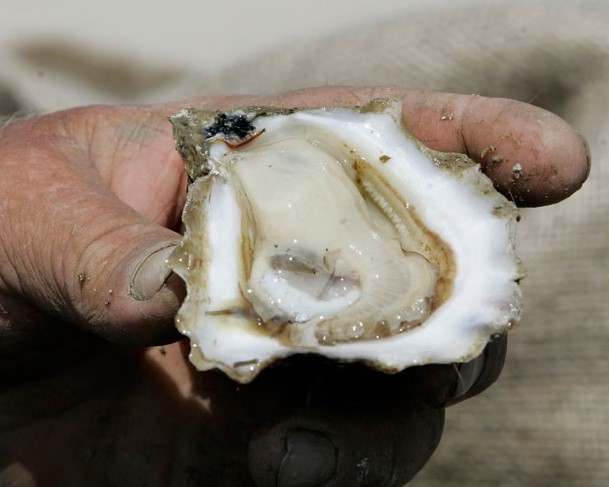
TBS is collecting oyster samples from Tampa Bay year-round. 🦪➡️🔬

Quarter 3 collections occurred in rather chilly weather, but they sure were fun! 🥶❄️

With a total of 4 field days & help from our local charter captains, the TBS team collected oysters from 19 different sites around the bay. These oysters will eventually be processed and analyzed for contaminants in our lab. 

The analyses will help us determine the health of our community, invertebrates included! 🌊🦪

#tampabaysurveillance #oysters #fielddayfun
TB REACH at #SDAFS2026 🎣

Dr. Noëlle Boucquey (@eckerdlife) presenting research on accessing wild fisheries in large metropolitan areas at the Southern Division of the @americanfisheries meeting in New Orleans (March 5-8).

Her talk explored how people access wild fisheries in large metropolitan areas and what those experiences reveal about shifting environmental conditions.

This work is part of the TB REACH study, a companion project within Tampa Bay Surveillance (TBS).

#FisheriesScience #Urbanfisheries #Tampabay #AFS
Meet the scientist behind the chemistry powering the Tampa Bay Surveillance Project.👩‍🔬

Dr. Isabel Romero, an organic geochemist, helped build the analytical backbone of our lab by developing the methods we use to track contaminants of emerging concern (CECs) in Tampa Bay using tools like the ASE (Accelerated Solvent Extractor) and GC-MS (Gas Chromatography–Mass Spectrometer). In simple terms: She helps us figure out what chemicals are hiding in Tampa Bay and what they tell us about the health of this community.🧪🐟

From maintaining complex instruments to training students and technicians in quality control, data interpretation, and analytical chemistry, Dr. Romero has shaped how our team studies pollution in the bay.
Even though she recently began a new faculty position at the University of South Carolina’s School of the Earth, Ocean and Environment, she remains deeply involved with TBS and continues to mentor our students and help ensure the data we produce is accurate and impactful.🌎

Safe to say… a lot of the science happening in our lab today started with her.🏁

Check out Isabel’s Staff Feature Friday to learn about the role curiosity and persistence have played in her scientific journey, the people and experiences that helped her build confidence as a scientist, and a simplified look at her contributions to the TBS project. 🌊🩵

#TBSProject #environmentalhealth #StaffFeatureFriday
Learn a little about the role of the GCMS (Gas Chromatography-Mass Spectrometry) in the Tampa Bay Surveillance Project. 💧📈

Stay tuned for Friday’s Staff Feature👀

#tbsproject #environmentalhealth #GCMS #data
Meet Holly Shuff, Survey Coordinator for the Tampa Bay REACH project. 👋

A Florida native and graduate student in Florida Studies at @usouthflorida , Holly serves as the bridge between faculty and undergraduate surveyors, training students, coordinating field efforts, and helping ensure community voices are reflected in our research.

Her work reminds us that strong science depends on strong relationships. From fishing tournaments to shoreline conversations, Holly has seen firsthand how local knowledge deepens our understanding of Tampa Bay and strengthens environmental decision-making. 🤝

She also credits much of her academic journey to mentorship – a powerful reminder of how investing in students today shapes the research leaders of tomorrow.

Read more in this week’s Staff Feature Friday and learn what advice Holly would give her younger self, Dr. Heather O'Leary's role in Holly's academic and professional pursuits, and what she loves most about the USF community! ✨

#EnvironmentalAnthropology #CommunityEngagement #USF #ResearchInAction #StaffFeatureFriday
We’re continuing to spotlight the social science side of TBS with a look at the latest TB REACH surveyor training at @eckerdlife .

Led by Drs. Noelle Boucquey and Jessie Fly, students from @usouthflorida and Eckerd are preparing to serve as the boots on the ground across Tampa Bay – engaging local fishers in conversations about where they fish, what they catch, how often they fish, and what they eat.

This summer marks one full year of fisher interviews – a major milestone for the project. 🎣

During training, students practiced survey operations, reviewed field procedures, and role-played real-world scenarios. The information they collect is paired with toxicology and contaminant findings from TBS to inform risk assessments and pollution mitigation strategies, helping protect community health.

Spot one of our surveyors at a pier or bridge? Say hello 👋 – or better yet, participate in the anonymous survey to support research working toward a healthier Tampa Bay.

Learn more about companion project TB REACH at the link in our bio.

📸 Drs. Fly and Boucquey leading training; students practicing mock survey conversations; a preview of the official TB REACH fisher survey.

#TampaBay #TampaBaySurveillance #TBREACH #MarineScience #communityscience
Meet Dr. Jessie Fly!

With arguably the coolest name on the project, Dr. Fly is an environmental anthropologist at @eckerdlife and a social science lead on the Tampa Bay REACH project – a companion study to TBS that pairs contaminant and toxicology data with community-based social science research to understand how chemical pollutants affect subsistence fishers.

For nearly a decade, Jessie has studied shore fishing communities around Tampa Bay, exploring how people use public fishing spaces, how those spaces function as shared “commons,” and how environmental change affects livelihoods, food access, and community connection. Through surveys, interviews, and conversations at piers and bridges, Jessie helps our team understand not just what’s in the water, but what fishing means to the people who rely on it. Shore fishing spots, she reminds us, are more than places to cast a line – they’re some of the few public spaces where people from all walks of life gather, connect, and build community.

Check out Jessie’s Staff Feature Friday to learn more about her work – and a few fun tidbits, too.

#TampaBayREACH #TampaBaySurveillance #EnvironmentalAnthropology #CommunityHealth #SubsistenceFishing
Science isn’t just data – it’s people. 🌿 

Last week, anthropologists Heather O’Leary (@usouthflorida), Jessie Fly, and Noëlle Boucquey (@eckerdlife) joined researchers from across Florida at the inaugural People & Nature Symposium in Gainesville. 

They shared work connected to TBS companion project Tampa Bay R.E.A.C.H. (Regional Estuary Assessment of Community Health) alongside related research on coastal communities and environmental decision-making: 

🎣 Why urban shore fishing builds community – and where risks exist 

🎶 Turning coastal science into music and art so anyone can understand it 

👩‍🔬 Understanding women’s experiences in fishing spaces 

From nature walks to research talks, the event focused on one big idea: conservation works best when we understand both ecosystems and the people who rely on them. 

Swipe to see the team in action ➡️

#TampaBay #ConservationScience #HumanDimensions #MarineScience #FloridaResearch
Meet Morgan Sharbaugh! 🌊🧪 

Morgan is a master’s student at @uofsc School of Earth, Ocean and Environment, working in Dr. Isabel C. Romero’s lab to analyze Tampa Bay Surveillance (TBS) sediment samples for contaminants. Sediments collected by the team at @usfmarinescience make their way north to South Carolina, where Morgan studies how pollutants vary across benthic surface sediments throughout Tampa Bay. 

With a background in Coastal Wetland Sciences and Marine Biochemistry, and time as an undergraduate researcher in the Blount Scholars program at University of Alabama, Morgan is especially interested in conservation and remediation research and the stories sediments can tell about environmental change. 

Learn what keeps Morgan motivated in the field, the unexpected realities of fieldwork, and what she might be doing if marine science hadn’t won her over. ✍️

#tampabaysurveillanceproject #marinescience #sedimentscience #biochemistry #wetlandscience
Meet Sydney! 🦪💙🦈

If you’ve ever wondered who’s behind the scenes helping dissect hundreds of oysters for the Tampa Bay Surveillance Project, this is her. Sydney is one of our incredible interns, bringing equal parts skill, curiosity, and kindness.

Sydney has fun carefully cracking open oysters to help us understand contaminants moving through Tampa Bay’s ecosystem. She supported barnacle deployments, proudly repping the Barnacle Baseline Drill Team (iykyk 🛠️🧠). Yes, those glass tiles don’t drill themselves.

Sydney recently graduated from USF with a B.S. in Marine Biology and now serves as the Science Coordinator for the Florida Institute of Oceanography. She’s an AAUS Scientific Diver with over 6,000 nautical miles at sea, has conducted coral reef and fish ecology research across the Caribbean and Pacific, and casually swims next to whale sharks like it’s no big deal (photo proof included 😮).

Passionate about diving, marine conservation, and doing the detailed work that makes big-picture science possible, Sydney is a huge part of what keeps TBS moving forward—from oysters to barnacles to bays. We’re so lucky to have her on the team! 🌊

Check out this Staff Feature Friday to discover Sydney’s favorite snack in the field, what she finds most exciting about her work with us, and who has positively impacted her journey! 

#TampaBaySurveillanceProject #OysterScience #BarnacleBaseline #WomenInScience
Before the episode drops, here’s a behind-the-scenes look. 👀 

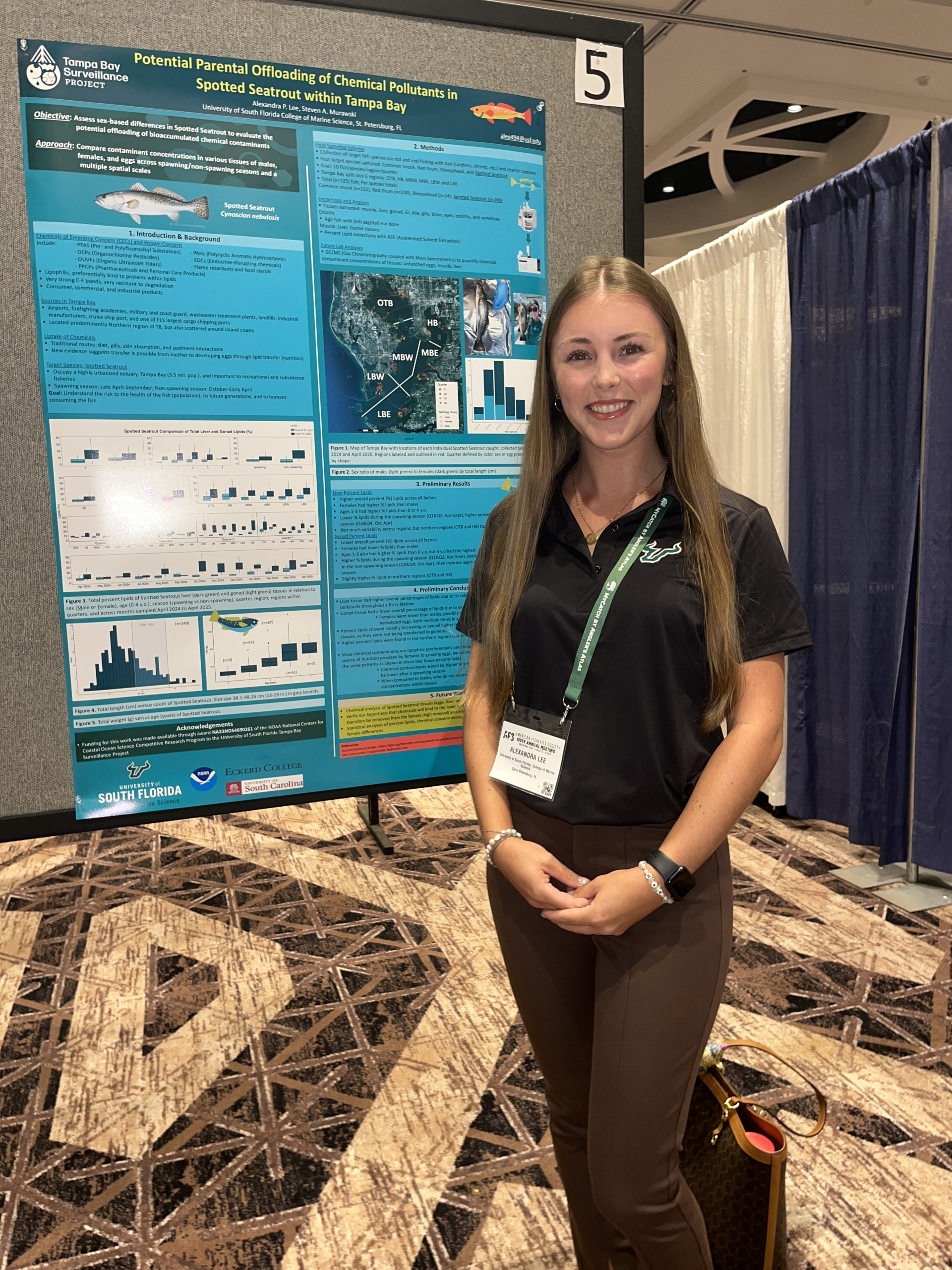
You’ll soon be able to hear about the Tampa Bay Surveillance (TBS) project on the Rising Tides Podcast from the @usfmarinescience. Last week, TBS Principal Investigator Steve Murawski and graduate researcher Alexandra Lee joined Elliott Wiser, professor of journalism in the Department of Journalism and Digital Communications @usfstpetersburg and host of the podcast, in the recording studio.

The conversation centered on what the TBS project is uncovering and why monitoring contaminants in Tampa Bay (and beyond!) matters. The discussion will air as part of season 2 of the Rising Tides Podcast, available on Acast, Spotify, Apple Podcasts, and Amazon Music. 

Stay tuned! 🎧🌊

#tbsproject #tampabay #sciencepodcast #marinescience #risingtidespodcast
Meet Gabe! 🌊

Gabriel McKenzie is the newest member of the TBS project and one of five @floridahightech undergraduate interns joining research teams at @usfmarinescience this semester. 

In just three weeks, Gabe has jumped into hands-on lab work, learning how to dissect oysters and barnacles, complete the freeze-drying process, and transfer and load samples for gas chromatography-mass spectrometry (GC-MS) analysis, which identifies what compounds are present and in what concentrations. This week, he also took part in the internship’s first science communication workshop, building skills to share research with diverse audiences – tools he will carry into future scientific work. 

Gabe is a fourth-year Marine Biology major with a minor in Environmental Science and Policy at @usfstpetersburg , and he’s also the vice president of his school’s ultimate frisbee team. 🥏

Learn who has made an impact on Gabe’s professional journey, what memory started it all, and everyone’s favorite…which marine animal he’d choose to ride into battle! ⚔️
Loading the next set of instagram posts...
Go to Top